Energy Independence Starts with Battery Storage
Power outages are becoming more common, and utility bills keep rising. For a lot of homeowners, that raises a straightforward question. Is energy independence actually possible? The answer depends on more than just generating power. It comes down to whether you can store it and use it when you need it. That’s where the shift happens. Energy independence starts with battery storage, and at Rubix Battery, we focus on closing that gap with systems designed to capture and deliver energy when it matters.
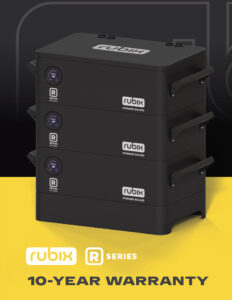
There’s a common assumption that installing solar panels means you’re done. In reality, that setup often pushes excess energy back to the utility during the day, then pulls it right back at a higher rate later. That’s not independence. That’s a different version of dependence. The shift happens when you introduce a reliable storage backbone like the R-Series lithium batteries. This is where daytime production becomes usable nighttime power. Instead of sending energy away, you keep it.
 The practical side of energy independence starts to show up quickly. You notice it during peak rate hours when your home isn’t pulling from the grid. You see it during outages when everything else goes dark, and your system keeps running. This is where energy independence becomes measurable. Your solar panels are the beginning, and energy storage is what makes that system work on your terms.
Flexibility is where most systems fall short. Many battery setups are rigid. You pick a size and live with that decision, whether your needs change or not. That approach doesn’t reflect how homes actually operate. Energy demand shifts over time. Families grow. Equipment changes. At Rubix Battery, we build around that reality. The Stack Series is designed to expand without forcing you into a complete system overhaul. You can start with a smaller footprint and build upward as your usage evolves.
The physical design matters just as much as the electrical performance. Traditional systems often require racks or cabinets and dedicated space that homeowners don’t always have. A stackable configuration removes that barrier. The system stays compact. You’re investing in usable capacity that can grow with you. That’s the difference between something that works today and something that continues to work as your needs change.
Reliability is where the conversation becomes technical, and it needs to be. Not all lithium batteries are built the same. We use LiFePO4 chemistry because it offers a safer profile and a longer cycle life compared to older lithium-ion or lead-acid designs. That translates into consistent performance over time without the degradation issues that shorten the lifespan of lesser systems. When you’re building something meant to support your home’s energy needs, longevity is expected.
The way Rubix Battery systems are built changes how people interact with their energy. It becomes something you manage rather than something you pay for and forget. Over time, that shift adds up. You rely less on the grid. You have more control during peak demand. You’re prepared when outages happen. Storage is what turns potential into control.
Energy independence is a long-term decision about stability and resilience. The grid will always be there, but it doesn’t have to dictate how your home operates. At Rubix Battery, we build systems that give you a real alternative. If you’re ready to move beyond partial solutions, contact us today for a look at what our full line of storage options can do. Start building an energy system that keeps going when the grid stops.